
Winter at the Cascade Lakes: Having North Twin Lake and Crane Prairie All to Ourselves

Winter Adventures at Suttle Lake
January 28, 2022
Best Central Oregon Nordic Skiing
March 21, 2026
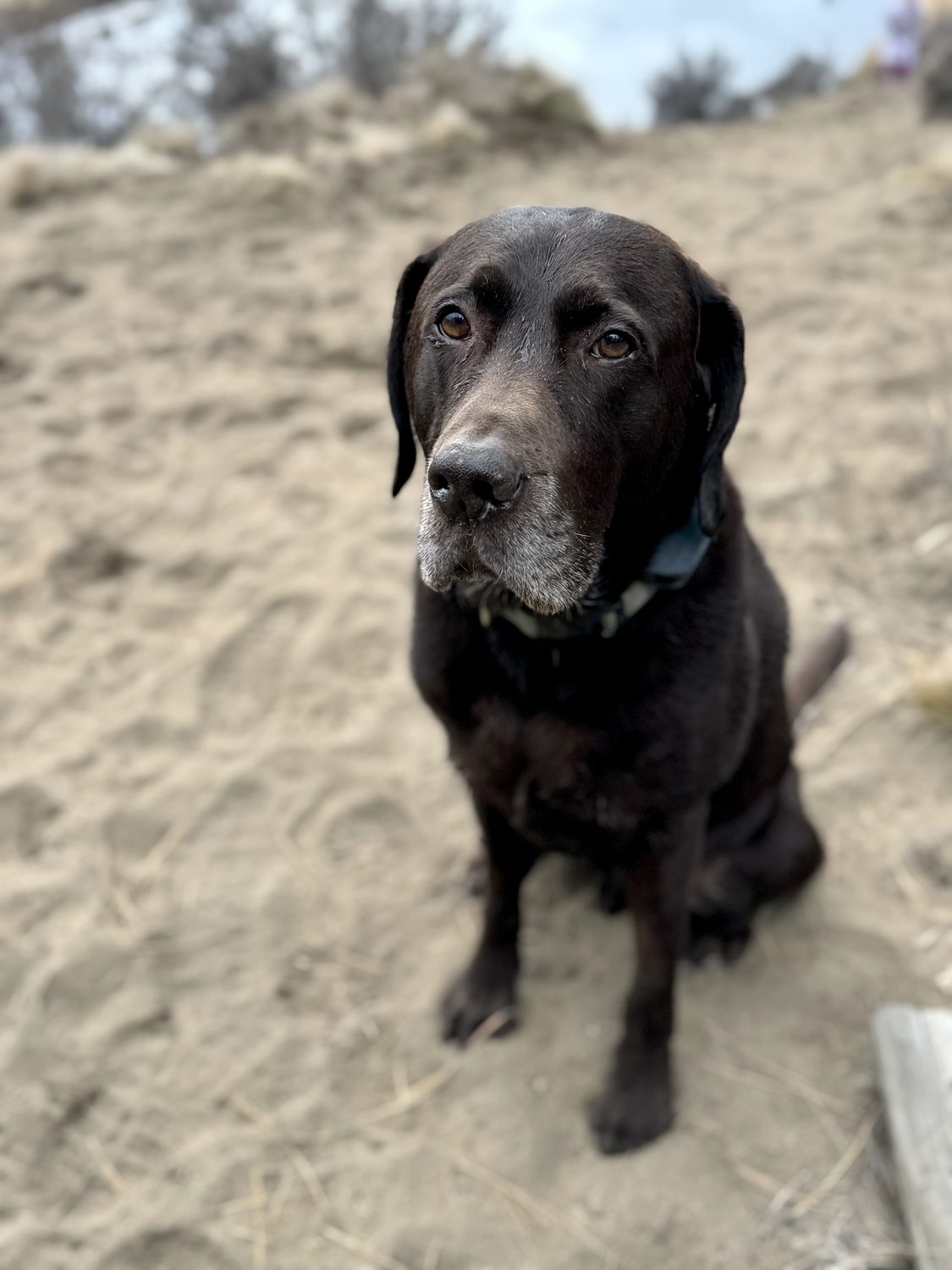
Summer at the Cascade Lakes means packed boat ramps, full campgrounds and a line of cars along the Cascade Lakes Highway. Come back in January and it feels like a different place. We live in Three Rivers, just down the road, so these lakes are basically our backyard. On a crisp, bluebird day this winter we drove out to North Twin Lake and Crane Prairie Reservoir and had both lakes completely to ourselves: no boats, no campers, just us, a lot of snow and our sweet old lab, Bo.
These photos are bittersweet for us now. Bo was 9½ and a true adventure dog. If we were heading outdoors, he was in. He passed away unexpectedly a few months after this trip, and looking back, this was one of those perfect, quiet days we’ll hold onto. He spent it doing exactly what he loved most: sniffing every inch of shoreline, rolling in the sand and trotting out ahead of us on the snow. This post is for him.
First stop: North Twin Lake
North Twin Lake sits in the Deschutes National Forest southwest of Sunriver, right next door to South Twin Lake and Wickiup Reservoir. In summer, it’s a favorite for swimming, paddling and camping. In winter, the campground is empty and the lake goes perfectly still.
It also has a pretty wild backstory. North Twin is a maar lake: about 20,000 years ago, rising magma ran into groundwater and set off violent steam explosions. They blasted out a broad, shallow crater, which later filled with water. South Twin, just half a mile away, formed the same way, which is how the “twins” got their name. North Twin covers about 112 acres and reaches roughly 60 feet at its deepest.
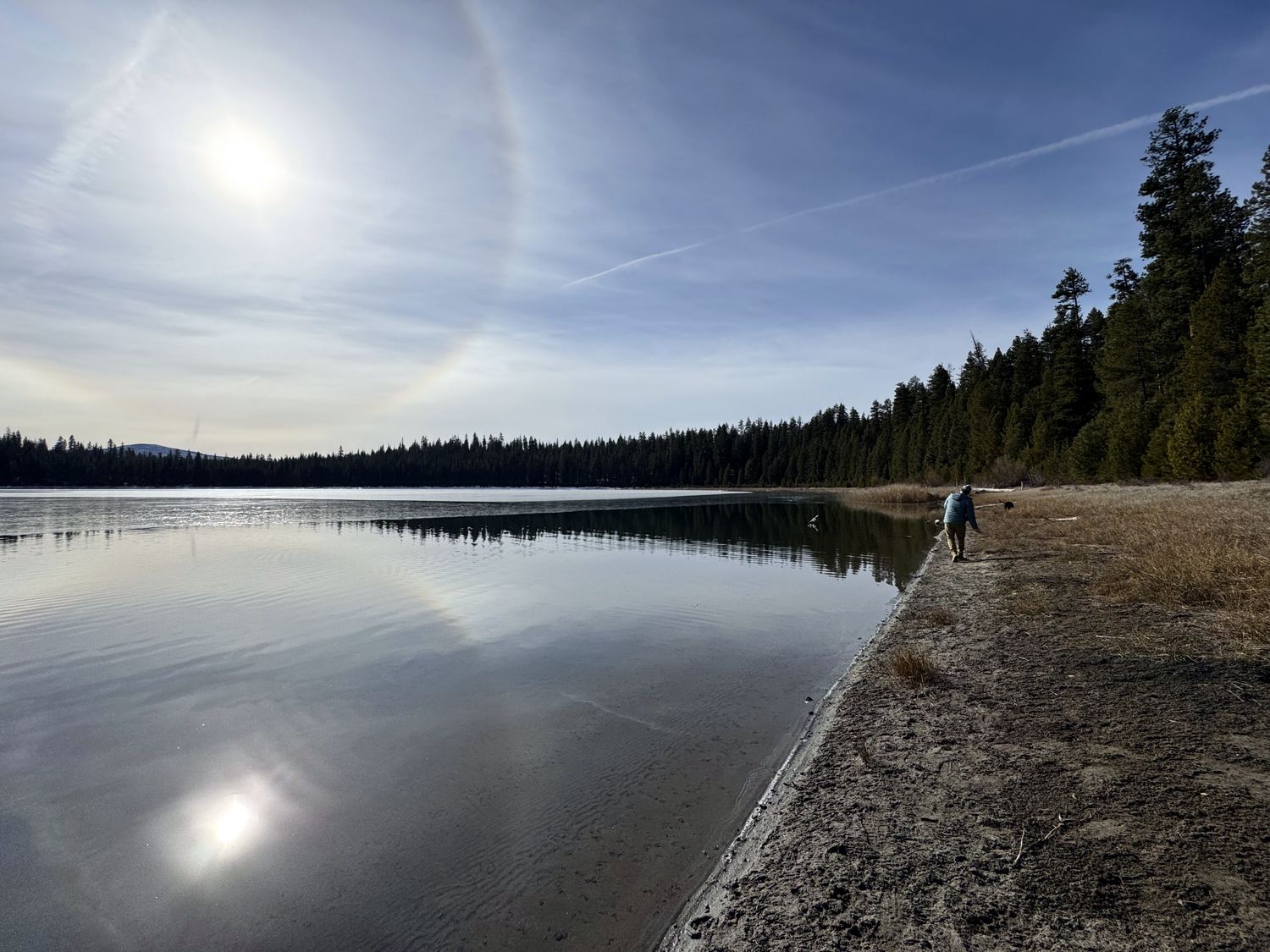
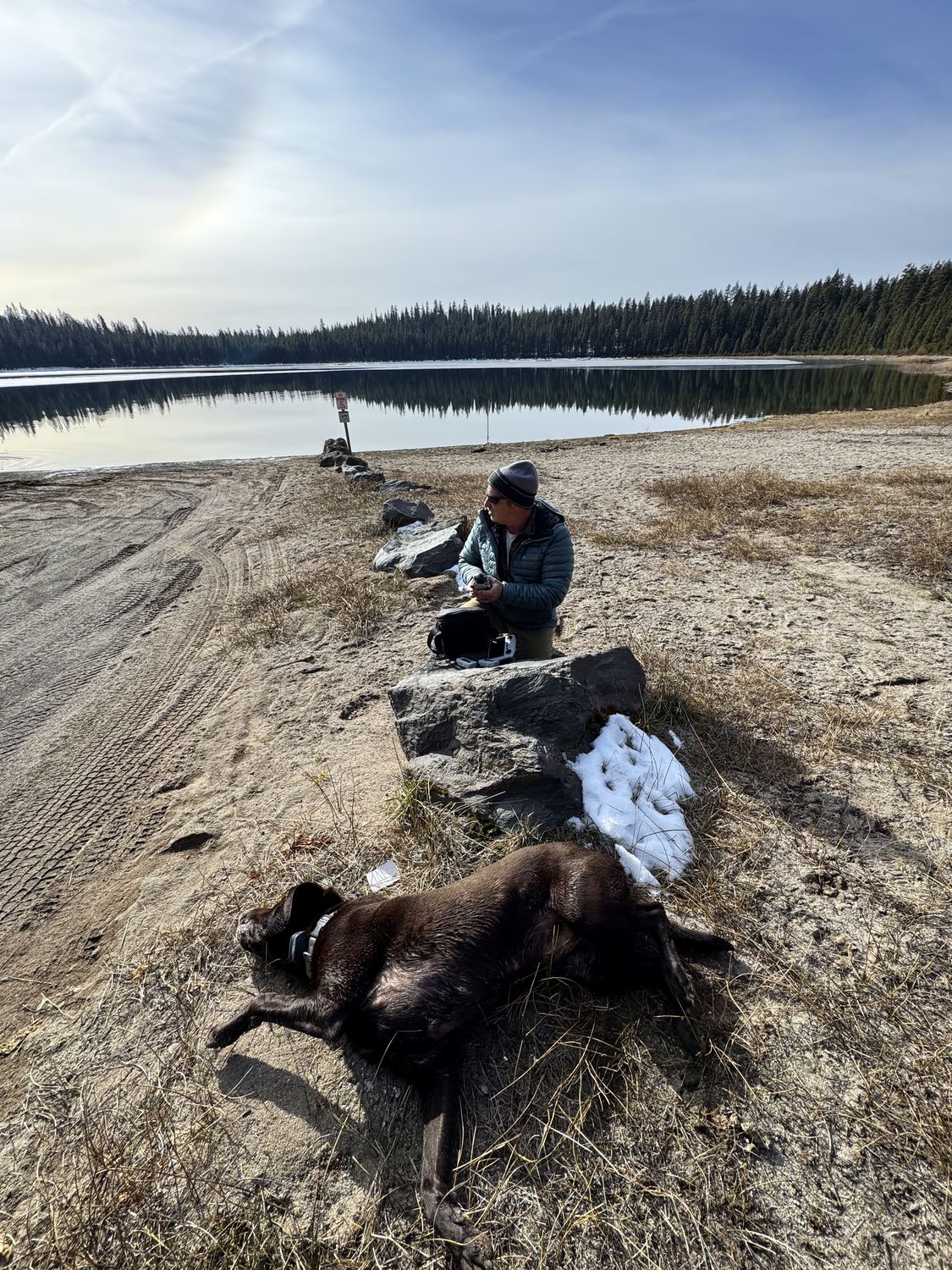
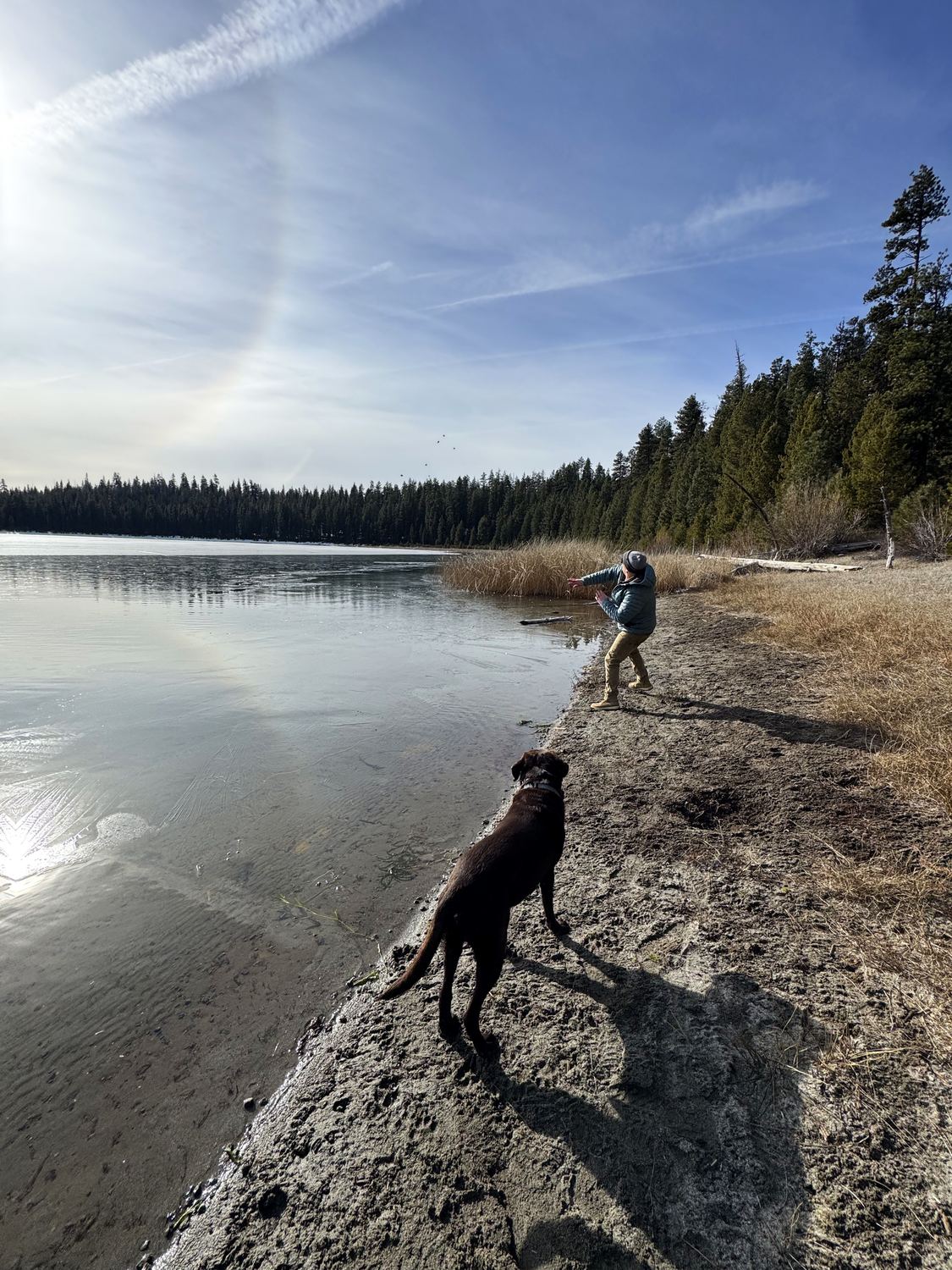
The sky put on a show while we were there. A thin layer of high clouds drifted over, and a full ring of light formed around the sun, reflecting in the glassy water at our feet.
What’s that ring around the sun?
It’s called a 22-degree halo, and it’s made of ice. When thin, wispy cirrus or cirrostratus clouds sit high overhead, they’re full of tiny six-sided ice crystals. Sunlight bends as it passes through those crystals and comes out at about a 22-degree angle, which traces a circle around the sun. Want to check whether you’re looking at one? Hold your hand out at arm’s length with your fingers spread, and cover the sun with your thumb. The ring should land right around the tip of your pinky. Old weather lore says a ring around the sun or moon means rain or snow is on the way, and sometimes it’s right.
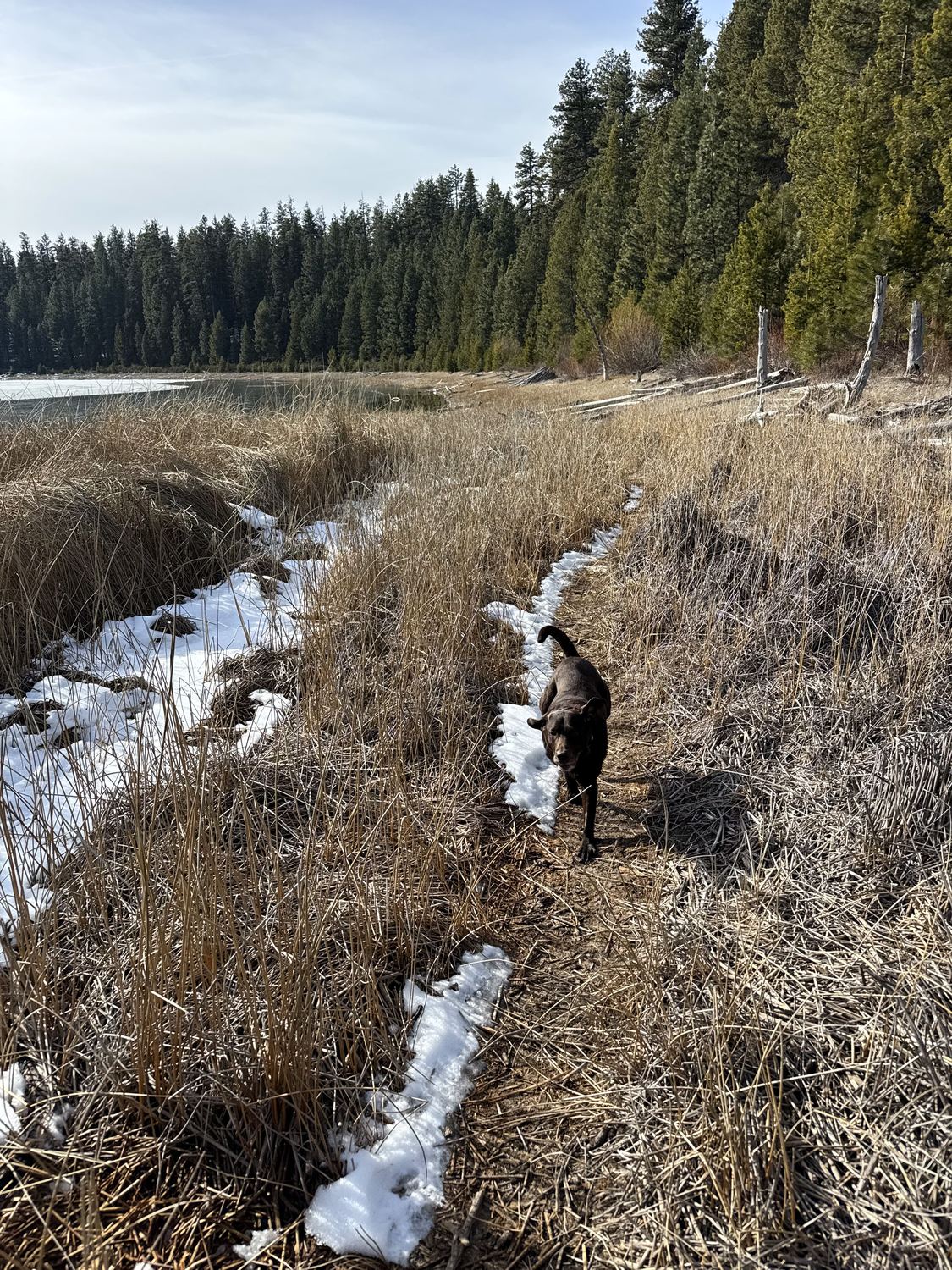
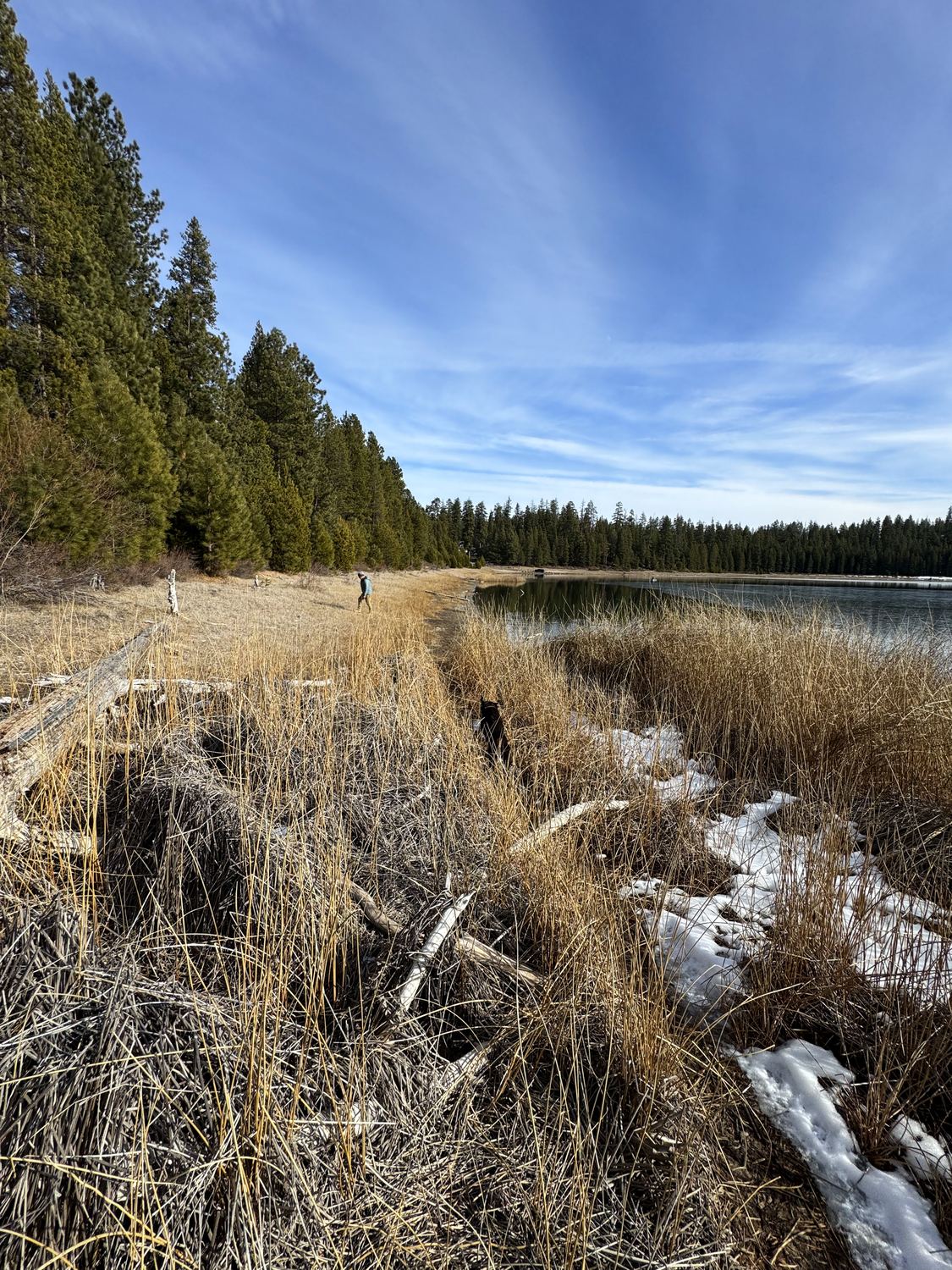
We followed the shoreline path through tall golden grasses, still lined with old snow in the shady spots. Bo led the way, of course. There’s nothing quite like a quiet winter lake. Without the summer crowds, you can hear the grass rustle in the breeze.
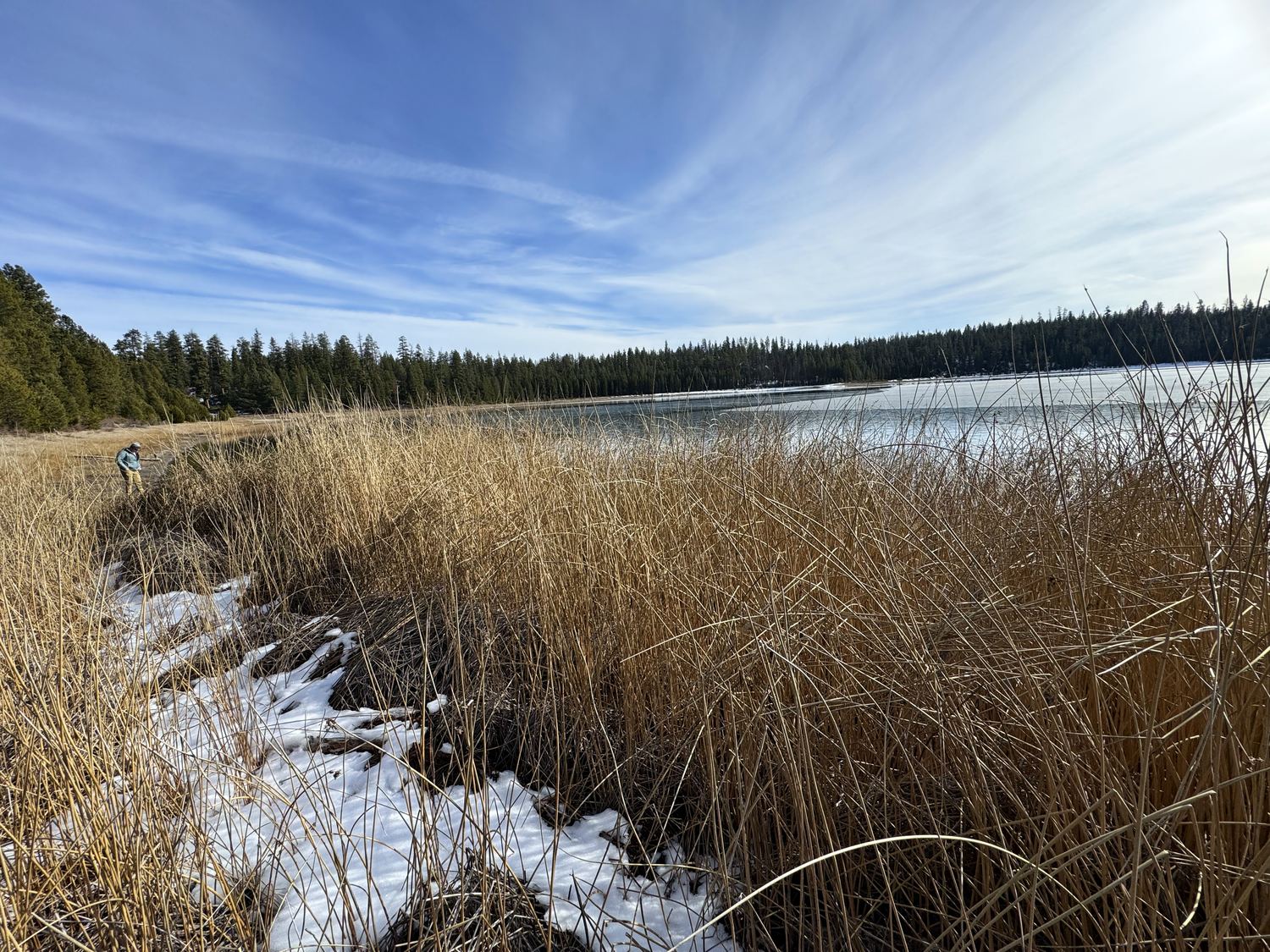
Next: Crane Prairie Reservoir, frozen over
Just a few miles north, Crane Prairie Reservoir looked like a completely different world. The whole reservoir was frozen and covered in snow, a huge white plain stretching out to the snowy Cascade peaks on the horizon. Standing out there in total silence, it was hard to believe this is the same place that’s busy with boats and anglers all summer.
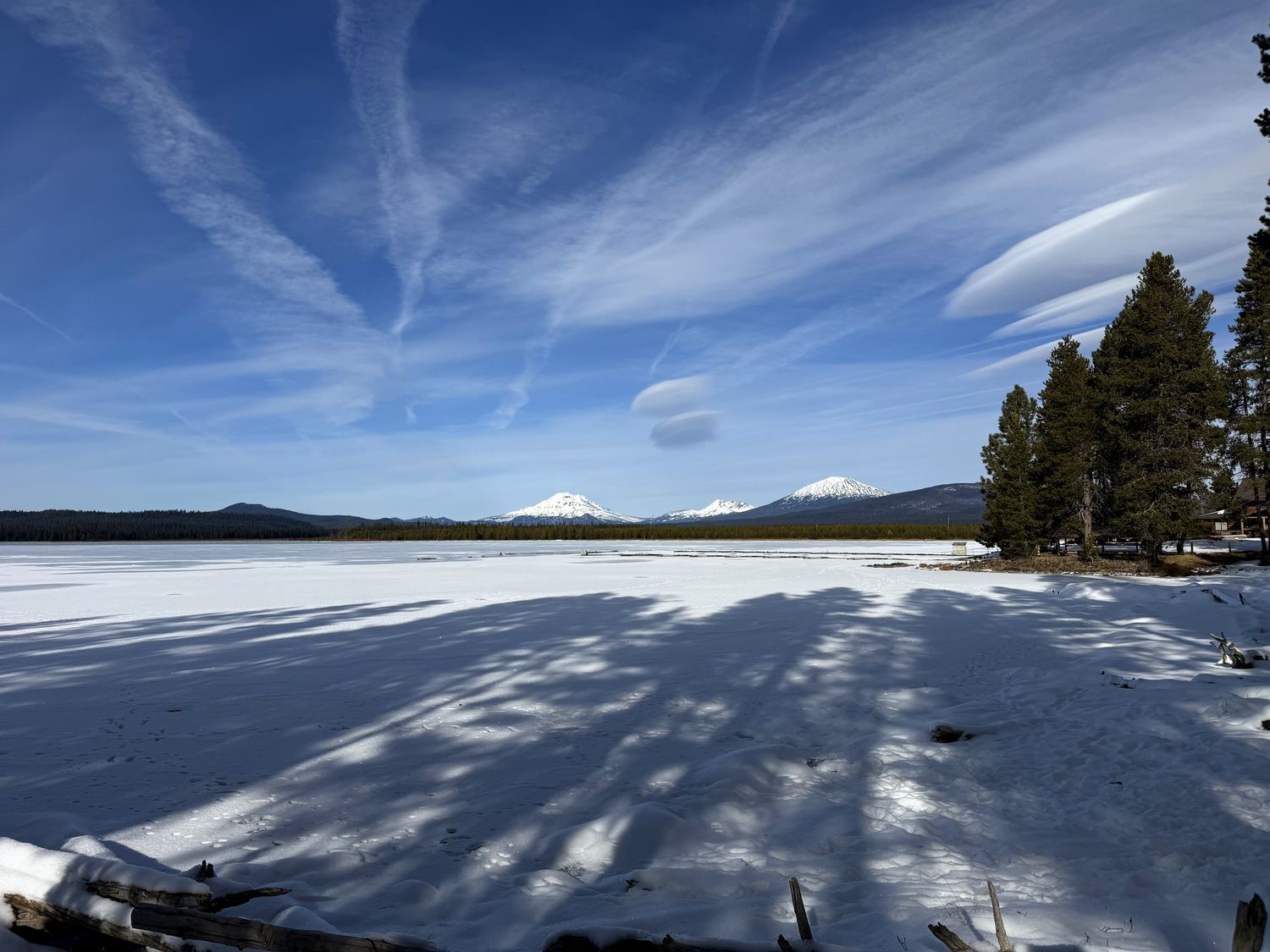
Crane Prairie gets its name from what used to be here: a wide prairie along the upper Deschutes River, home to plenty of cranes. In 1922, irrigation interests dammed the river to store water for farms in Central Oregon, and the meadow became a reservoir. The original rock-filled dam leaked, so the Bureau of Reclamation rebuilt it in 1940.
Flooding the prairie left behind thousands of standing dead trees, and those tall snags turned Crane Prairie into prime osprey habitat. In 1969, the Crane Prairie Reservoir Osprey Management Area was established to protect them, and it’s still one of the best places in Central Oregon to watch osprey, bald eagles and waterfowl. The osprey head south for the winter, so we had the reservoir to ourselves. Come back in spring and summer to see them fishing over the water. Stop at Osprey Point for interpretive signs and a look at the nesting platforms.
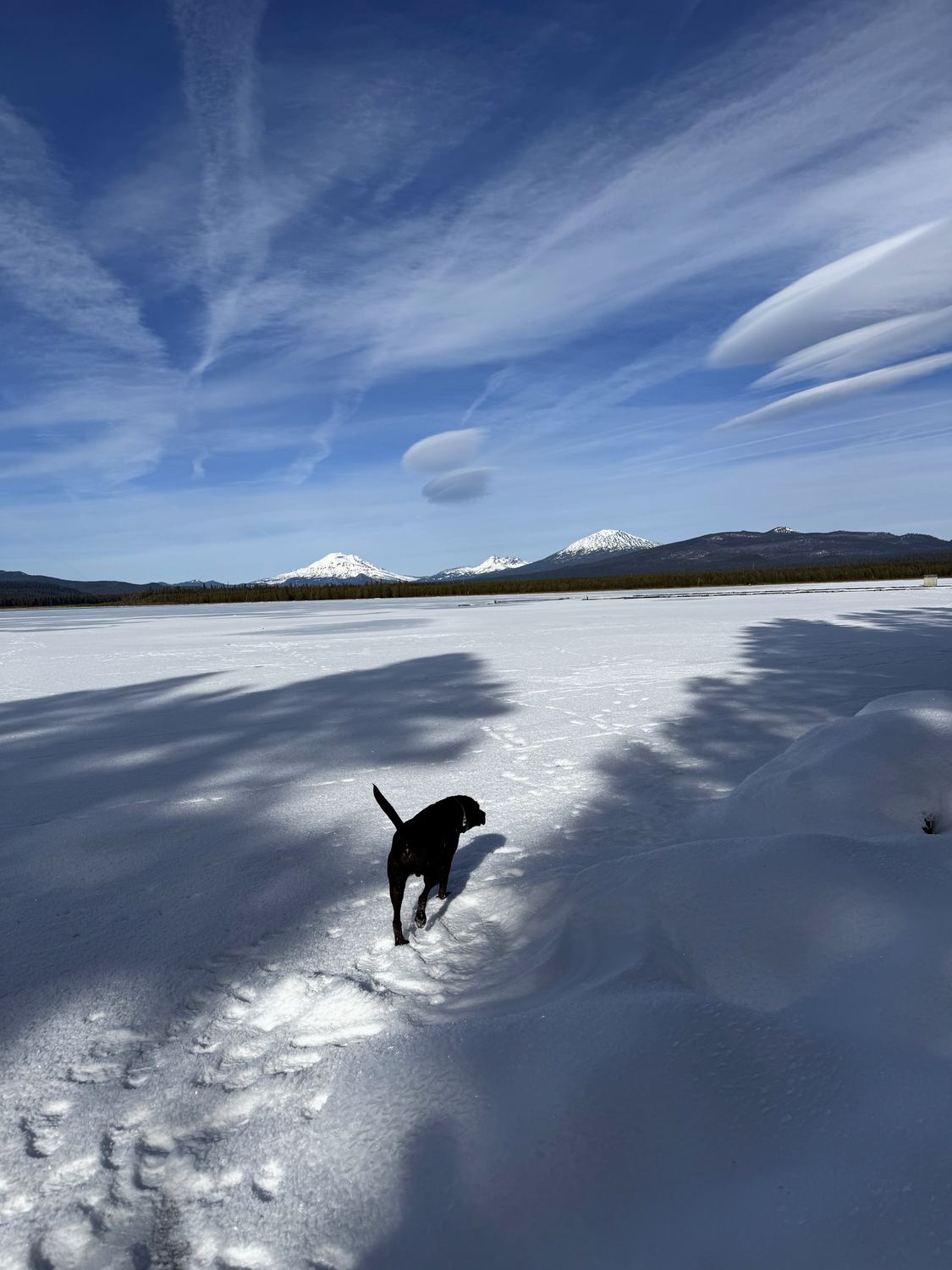
Bo was in heaven out on the snow, nose down and tail up, following every animal track he could find.
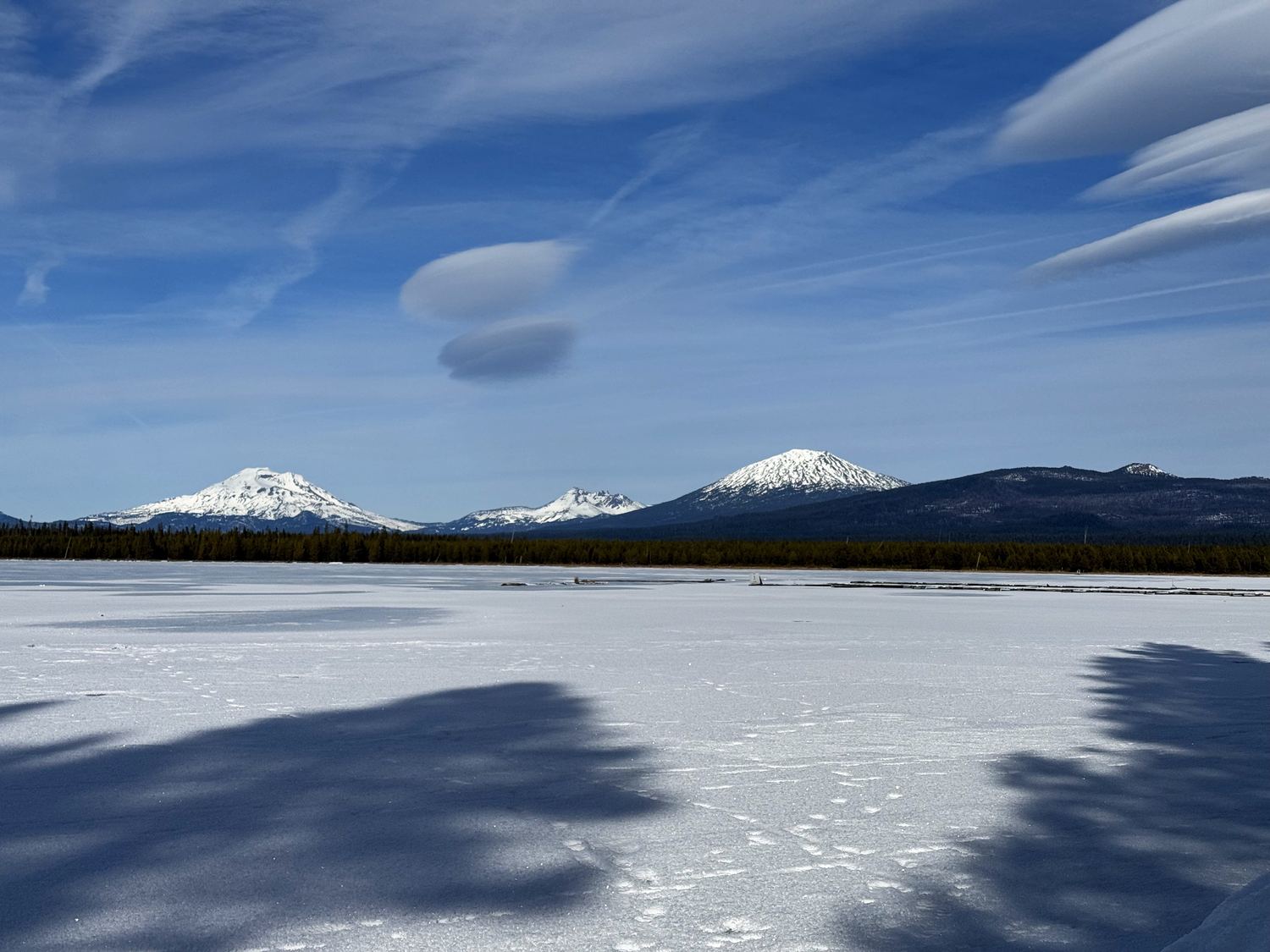
Those UFO-looking clouds
Look closely above the mountains in these photos and you’ll see smooth, saucer-shaped clouds. Those are lenticular clouds. They form when stable, moist air flows over mountains and gets pushed into waves, like water rippling over a rock in a stream. Where the air rises to the top of a wave, it cools and condenses into a cloud. Because the wave stays in one place, so does the cloud. They can hover over the same spot for hours, and they’re often blamed for UFO sightings. They also tend to mean strong winds up high, so pilots steer clear of them.
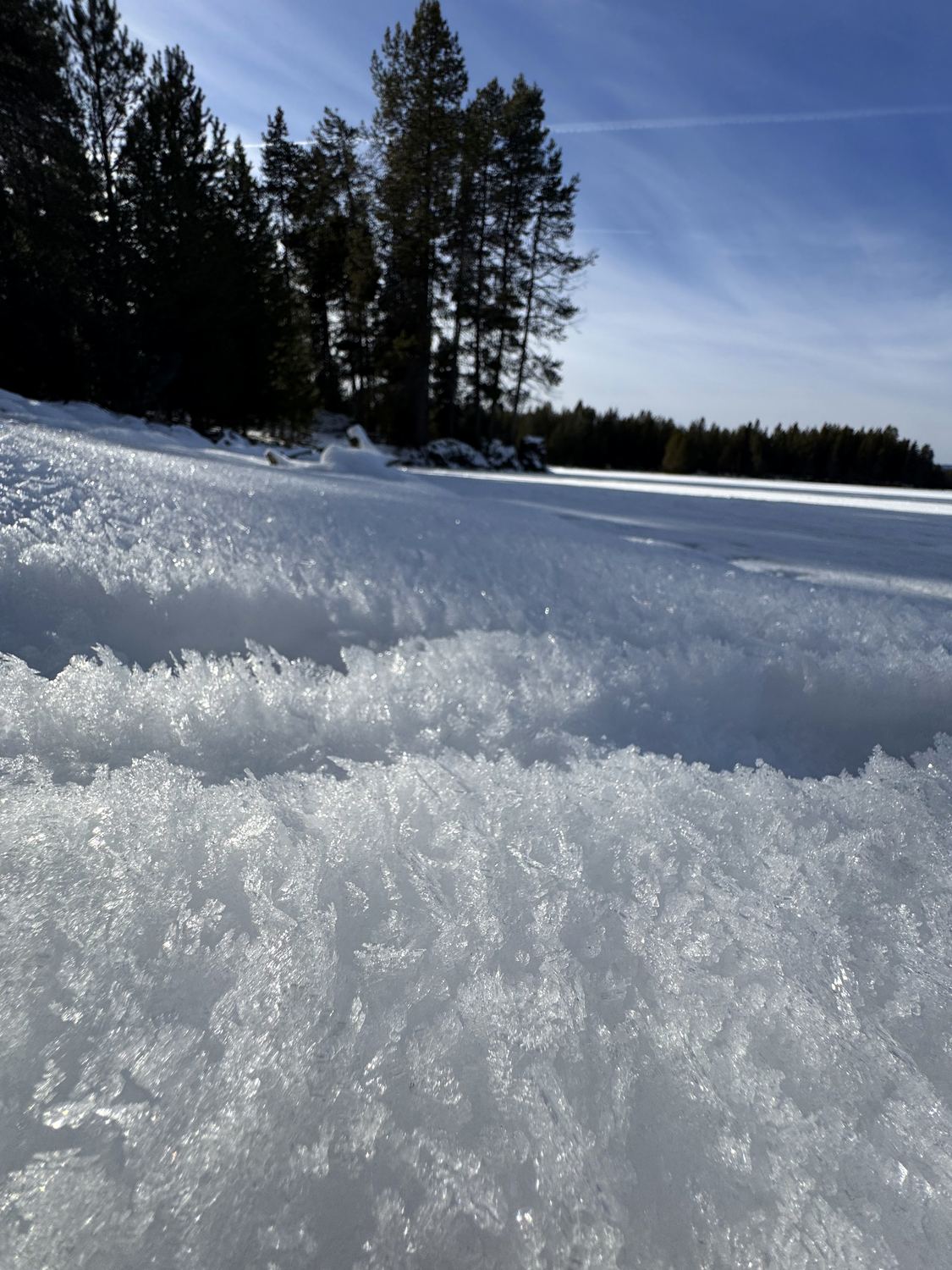
Down at our feet, the snow had its own show going on: delicate, feathery frost crystals that sparkled when the light hit them. Get down low with your phone camera on a cold, clear morning and you’ll find a whole tiny world in the snow.
Tips for visiting the Cascade Lakes in winter
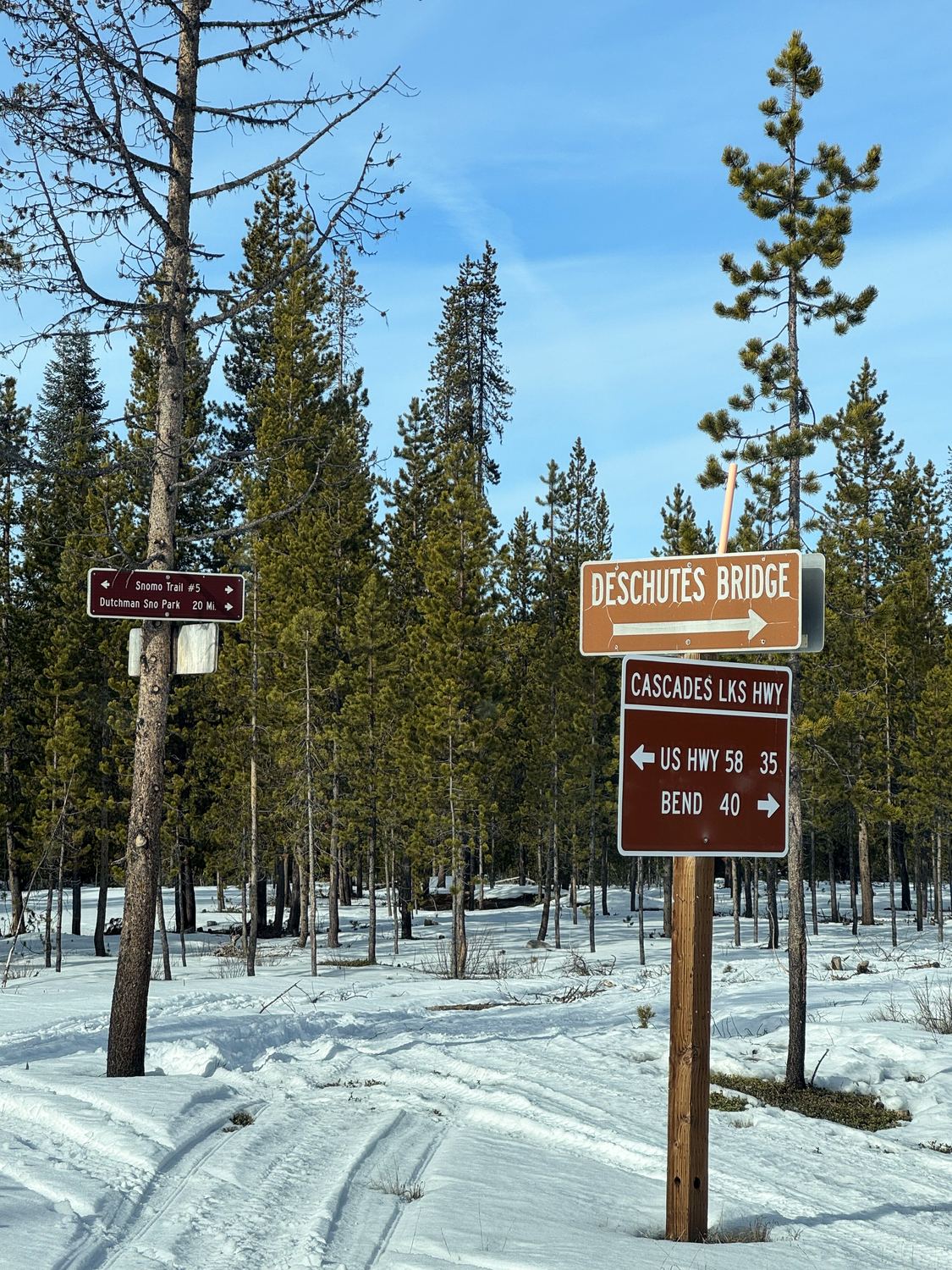
- You can’t drive over from Mt. Bachelor. Each winter, Deschutes County closes the Cascade Lakes Highway between the snow gates at Dutchman Flat (near Mt. Bachelor) and Deschutes Bridge. It usually reopens before Memorial Day. To reach Twin Lakes and Crane Prairie in winter, come in from the south side through the Sunriver and La Pine area. That’s the way we went.
- Check road conditions before you go. Forest roads out here aren’t always plowed, and conditions change quickly. A high-clearance or all-wheel-drive vehicle, chains and a shovel are smart to bring.
- Be careful around ice. Ice thickness on lakes and reservoirs varies a lot. Water moves underneath, especially near inlets, dams and channels. When in doubt, stay on shore.
- Pack like it’s the backcountry. There are no services out here in winter and cell service is spotty. Bring layers, extra food and water, a headlamp and a fully charged phone, and tell someone where you’re going.
- Bring the dog (on a leash near wildlife). Empty winter shorelines are a dream for dogs. Bring a towel and a blanket for the drive home.
Why winter might be the best season out here
We love the Cascade Lakes in summer, but there’s something special about seeing them asleep under the snow. No crowds, no noise, wild skies and room for a happy old dog to run wherever his nose takes him. If you’ve only ever visited in July, pick a clear winter day and go see them in the quiet season. You might have them all to yourself, too.
Miss you, Bo. Thanks for all the adventures. 🐾
Looking for more snowy adventures near Bend? Check out our guides to Central Oregon Nordic skiing and winter at Suttle Lake, or grab our printable Central Oregon Winter Bucket List.


